Who We Are
Advocacy Bridge CIC is a not-for-profit, community-focused organisation providing consent-led, one-to-one advocacy for adults who find it difficult to navigate services and systems independently.
We support people who feel overwhelmed, are disengaging, or are at risk of falling through gaps — and we work alongside the organisations trying to support them.
Our role is practical and relational:
to help people understand what’s happening, clarify their options, and re-engage with services at a pace that protects safety, dignity, and autonomy.
We often support adults affected by trauma, late-identified neurodivergence, burnout, or periods of instability — particularly where traditional processes feel inaccessible or overwhelming.
As a Community Interest Company, all activity is for public benefit. Any surplus is reinvested into clearer pathways, practical tools, and accessible guidance that reduce drop-out and exclusion.
A Relational Bridge
We are not a crisis or clinical service.
We provide the steady, human support that many systems do not have the capacity to offer.
Many services rely on clarity, executive functioning, emotional regulation, and resilience — even when someone is in distress.
When capacity drops:
Appointments are missed.
Forms go unfinished.
Deadlines pass.
Communication breaks down.
Not because someone doesn’t care —
but because there is a mismatch between system demands and human capacity.
When that mismatch isn’t recognised, support can quietly collapse.
Advocacy Bridge works with a person’s nervous system and cognitive capacity — not against it.
We slow things down when needed, break processes into manageable steps, translate system language into accessible explanations, and support communication before, during, and after key conversations.
We do not rush.
We do not override.
We work alongside.
What This Makes Possible
When the bridge is in place, people are more able to:
• Engage safely
• Make informed decisions
• Communicate clearly
• Maintain dignity
• Access the support they are entitled to
This is not about dependency.
It is about supported autonomy.
Our Role
We support progress without pressure — creating conditions where people feel steady enough to move forward.
We help to:
• Clarify realistic next steps
• Break information into manageable pieces
• Provide calm, consistent guidance
• Strengthen communication and self-advocacy
We do not replace statutory or clinical services.
We bridge the space between people and the systems meant to support them.
Our Aim
Our aim is simple:
To prevent people from slipping through gaps and support safer, more sustainable engagement with the systems around them.
By improving engagement and reducing barriers, Advocacy Bridge also helps organisations deliver support more effectively — without adding pressure to already stretched teams.
How We Work
Person-centred & consent-led
Support is guided by the individual. Nothing is shared without permission.
Purposeful & time-limited
We stay alongside someone while support is helpful and step back when they feel able to continue independently.
Barrier-aware & collaborative
We work alongside existing services — strengthening communication, reducing missed appointments, and preventing disengagement.
Important
Advocacy Bridge is not a crisis service.
If someone is at immediate risk, please contact:
• 999
• NHS 111
• Your GP
Bridging the gap.
Who We Support
Advocacy Bridge supports adults who find it hard to navigate services, systems, or life transitions alone.
Not everyone we support is in visible crisis.
From the outside, someone may look like they’re coping — but internally they may feel overwhelmed, exhausted, or close to their limit.
Many people are doing their best to keep going while quietly struggling with appointments, decisions, communication, or paperwork.
You do not have to be in crisis to deserve support.
If things feel confusing, heavy, or difficult to manage alone — that is enough.
People Often Reach Out When They:
-
Feel overwhelmed by forms, questions, or complex systems
-
Struggle to keep up with calls, emails, or appointments
-
Shut down, withdraw, or mask in meetings
-
Find it hard to explain their needs or priorities
-
Are neurodivergent and navigating executive functioning or sensory challenges
-
Move between services without clear progress
-
Feel close to disengaging but don’t meet crisis thresholds
Sometimes calm, steady support makes complex situations manageable again.
How Advocacy Bridge Works
We work in a structured, steady way to reduce overwhelm, increase clarity, and help the right conversations happen — with the right people.
1. Written Enquiry
We begin with a written enquiry to protect clarity and confidentiality.
Once received, we review it carefully and outline the next step.
2. Clarifying the Situation
We may ask follow-up questions, suggest a short guidance call, or recommend an appropriate pathway (health, housing, benefits, legal, social care).
Before any structured work begins, we clearly explain whether support is free signposting or chargeable advocacy.
There are no hidden steps.
3. Family Referrals (Adults 18+)
Where someone is referred by family or supporters, we aim to build a balanced picture and, where appropriate, speak directly with the adult concerned.
In most cases, we do not proceed without informed consent unless there is a safeguarding concern.
Referrals & Enquiries
If you’re enquiring for yourself or someone you care about and:
-
You’re not sure what support is available
-
You know what you need but don’t know how to access it
-
You just need to talk something through first
-
You want to explore whether advocacy feels appropriate
You can begin by completing our Contact / Enquiry Form.
This is a light-touch form designed to gently open the conversation — not overwhelm you.
What This Form Is For
The enquiry form allows you to:
-
Ask questions
-
Explore whether advocacy support feels suitable
-
Check availability
-
Understand possible next steps
It helps us build a broad picture of:
-
Current support needs
-
Communication preferences
-
Capacity and wellbeing considerations
-
Housing, employment, or funding context (if relevant)
You do not need to have everything figured out.
Consent & Referrals
If you are referring someone to Advocacy Bridge, we will need confirmation that:
-
The individual has given consent for us to contact them
-
They are aware the referral has been made
Unless you have requested that we contact you first.
We are unable to proceed without consent.
What Happens Next
Once an enquiry or referral form is received:
1. We review the information carefully.
2. We contact the individual directly (or the referrer where agreed) using the stated contact preferences.
3. We arrange an initial conversation to understand needs, capacity, and what support may be helpful.
Support can only be considered once:
-
An enquiry form has been submitted
-
An initial conversation has taken place
Response Times
We aim to respond within a few hours to a few working days, depending on availability and capacity.
We will contact you using your stated communication preferences wherever possible.
📍 Based in Dinnington Sheffield (S25) — Supporting people UK-wide
🔗 Not sure what you need? Get in touch for a no-pressure chat.
🧭 How Advocacy Bridge Came to Exist
Advocacy Bridge CIC was created from lived experience, not theory.
Across communities, many people find themselves lost in a maze of services, forms, assessments, and waiting lists. Even when support exists, it can be hard to access, sustain, or navigate — particularly where services are stretched, pathways are unclear, or a person’s real capacity and needs aren’t easily recognised or communicated.
Support that should help can feel confusing or inconsistent, especially for those who have managed independently for years, until a change in health, capacity, or life circumstances makes things harder to navigate alone.
Through lived experience and community conversations — including those of our founder, Michelle Shaw — clear patterns began to emerge:
People unsure where to begin.
Unsure where to turn or who to trust.
Unsure of the systems, language, or unwritten rules.
Finding it hard to explain what they needed.
Unsure how to make themselves heard and feel held.
As these experiences were shared more openly, many people spoke about feeling stuck, overloaded, and overwhelmed by the different strands of their lives.
When support sat in separate “lanes,” some people found their situations were too complex for any one service to hold. Often shaped by survival and life circumstances, their needs didn’t fit neatly into one pathway — particularly where support was time-bound or session-limited.
When services ended or paused, continuity was often lost. Many people had to retell their story to each new professional, even when the questions were similar. For those with invisible disabilities, fluctuating capacity, or layered circumstances, their reality wasn’t always fully understood.
Many were capable in some areas while struggling significantly in others. When support didn’t meet them where they were, people could feel misunderstood or overlooked.
Over time, this left many feeling depleted, discouraged, and unsure where to turn next.
Advocacy Bridge CIC grew from recognising this gap.
It formalises an approach developed through lived experience and real-world support: now delivered in a structured, ethical, and sustainable way that benefits both the person seeking help and the professionals involved in their care.
We help people prioritise their physical and mental health and emotional wellbeing, slow things down, untangle complex situations, recognise barriers, build healthy boundaries, communicate clearly, and take steady steps forward when life feels stuck or overwhelming.
So people can regain clarity, confidence, and direction — with support that respects who they are, what they’re carrying, and space to move forward in ways that work for them.
Getting clarity
“I’d been trying to get support for months but didn’t know what I needed or what anything was called.
Within a week of connecting with Michelle, things started moving. She understood who to speak to, how to ask, and how to explain things in a way that helped progress happen.
Feeling invisible
“Before Advocacy Bridge, I felt invisible. I was being passed between services, and no one seemed to understand what I was carrying.
Michelle helped see the bigger picture and slowed things down so I could breathe and feel human again.
Feeling unheard
“I didn’t need another leaflet or helpline. I needed someone who didn’t make me repeat my story over and over — someone who could anticipate what might help, walk me through next steps, and explain what to expect instead of expecting me to speak up on demand.
Michelle didn’t just listen — she helped me make sense of everything and took practical steps with me. I honestly don’t know what I would have done without that support.”
Finding breathing space
“I was exhausted from repeating my situation and trying to manage everything myself. Having someone who understood how the systems worked — and could help me communicate what I needed — made a huge difference.
It meant I could focus on my wellbeing instead of constantly firefighting.”
Building confidence
“I didn’t just get help in the moment — I started understanding how things worked and what I could ask for.
With support alongside me, I felt more confident speaking up, making decisions, and handling things step by step. It wasn’t about someone taking over, it was about having the right support while I found my footing again.”

Supporting Adults Across the UK
Advocacy Bridge CIC offers remote, one-to-one advocacy and navigation support to adults across the UK.
We work with people who are emerging from crisis, moving through transition, or stabilising after disruption — particularly where systems feel overwhelming or inaccessible.
Support is delivered at a pace that feels safe, clear, and achievable, wherever you are based.
News & Updates
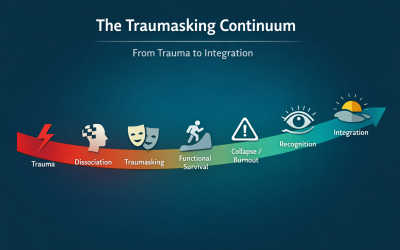
Traumasking: When Survival Becomes a Personality
The structural relationship between trauma, masking, and identity continuity. There is masking. And then there is traumasking. Masking is often described as adjusting yourself to fit the environment—smoothing the edges, choosing the socially acceptable response,...

The Instruction Manual You Didn’t Know Existed
Some people move through life with a quiet sense that something is off. They work harder than others just to keep up.They rehearse conversations in their head.They copy behaviours.They feel exhausted after “normal” days.They wonder why simple things feel so...

Most People Look at a Tombstone and See Dates
🌿 Most People Look at a Tombstone and See Dates. I Look at a Tombstone and See a Story. Not when someone lived —but how they lived.Who they became.What they fought for.What they survived.And how their soul evolved across the chapters of their one and only life. Maybe...

Get in Touch. Get Involved.
The Advocacy Bridge CIC is built on connection and collaboration. If you’d like to refer someone, partner with us, volunteer, or support our mission, we’d love to hear from you.
Matrix@Dinnington Business Centre, Nobel Way, Dinnington, Sheffield S25 3QB
📞 01709 262005